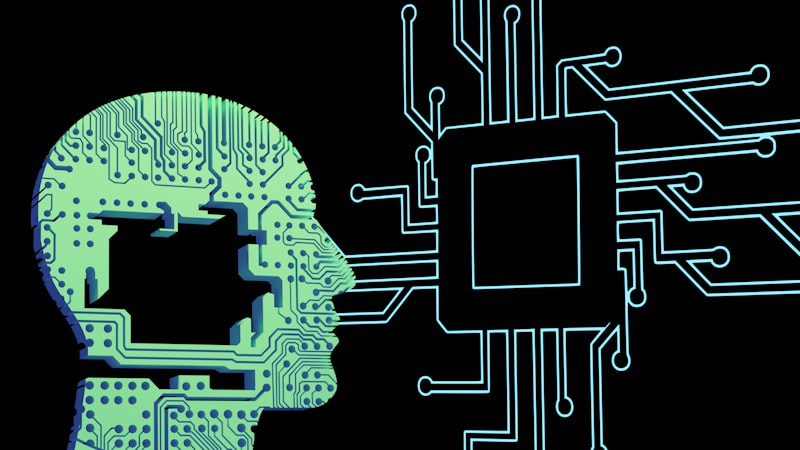
Beyond Code Completion: The Age of AI Agents
The AI revolution in software development started with autocomplete suggestions and simple code generation. In 2026, we have entered a fundamentally different era — AI agents that can understand complex requirements, plan multi-step implementations, and execute end-to-end development tasks with minimal human intervention.
What Makes AI Agents Different
Unlike traditional AI coding assistants that respond to individual prompts, AI agents operate autonomously across extended workflows. They can read codebases, identify patterns, plan changes across multiple files, run tests, debug failures, and iterate until the task is complete. The shift is from reactive assistance to proactive collaboration.
Modern AI agents maintain context across entire projects, understand architectural decisions, and can reason about tradeoffs. They are not replacing developers — they are becoming powerful teammates that handle the repetitive implementation work while humans focus on design, strategy, and quality assurance.
Real-World Impact on Enterprise Development
Accelerated Feature Development
Teams using AI agents report 40–70% faster feature delivery for well-defined tasks. The agents excel at boilerplate generation, API integrations, CRUD operations, and test writing — tasks that consume significant developer time but do not require creative problem-solving.
Improved Code Quality
AI agents can enforce coding standards, identify potential bugs before they reach production, and generate comprehensive test suites. They provide a consistent safety net that catches issues that even experienced developers might miss during code review.
Reduced Technical Debt
Agents can systematically refactor codebases, migrate between framework versions, and update deprecated dependencies — tasks that often get deferred due to time pressure. This makes codebase maintenance more affordable and less disruptive.
Challenges and Considerations
AI agents are not without limitations. They require careful oversight for security-sensitive code, complex architectural decisions, and business-critical logic. The most effective teams use a collaborative model: AI handles implementation while engineers provide direction, review, and make judgment calls that require human expertise.
What This Means for Your Business
Companies that integrate AI agents into their development workflow gain a significant competitive advantage — faster time to market, lower development costs, and higher code quality. At HerzSoft, we leverage AI tools throughout our development process and help clients integrate AI capabilities into their own products and operations.